True sciatica is rare.
The imposter is everywhere.
And almost nobody knows the difference, which means a lot of people end up at the wrong kind of appointment for the wrong reason.
This is the last post in a series on referred pain. The pattern, by now: a tight muscle doesn't always hurt where the muscle is. "Sciatica" is the most consequential example, because the label sends people down a path of imaging and injections when the actual problem is a buttock muscle that most people don't know they have.
Two things to get straight first.
Real sciatica is irritation or compression of the sciatic nerve where it exits the lumbar spine or runs through the pelvis. It usually involves numbness, tingling, or muscle weakness somewhere down the leg, not just pain. It often runs all the way to the foot. Disc bulges, stenosis, or specific entrapments cause it. It deserves a doctor and often deserves imaging.
The imposter is a muscle in the buttock referring pain into a pattern that mimics nerve pain almost perfectly. No nerve involvement. No numbness in the foot. No weakness. Just pain that, on first description, sounds exactly like sciatica.
The imposters, in order of likelihood:
Gluteus minimus. The master mimic. The deepest of the three gluteal muscles. Refers pain that runs from the buttock all the way down the side or back of the leg to the foot, in patterns indistinguishable from true sciatica without specific testing. Most people who get full relief from bodywork for "sciatica" had this muscle all along.
Piriformis. Smaller, deeper, sitting just under glute maximus, running diagonally from the sacrum to the upper femur. The sciatic nerve passes right next to it, sometimes through it. When piriformis locks, it can either mechanically irritate the nerve (called piriformis syndrome) or just refer its own pain into the buttock and back of the thigh. The pain usually stops at the back of the knee. Real sciatica usually keeps going.
Gluteus medius and TFL (tensor fasciae latae) also play, often in supporting roles. Glute medius refers across the low back into the upper buttock. TFL refers down the outside of the thigh, sometimes to the knee.
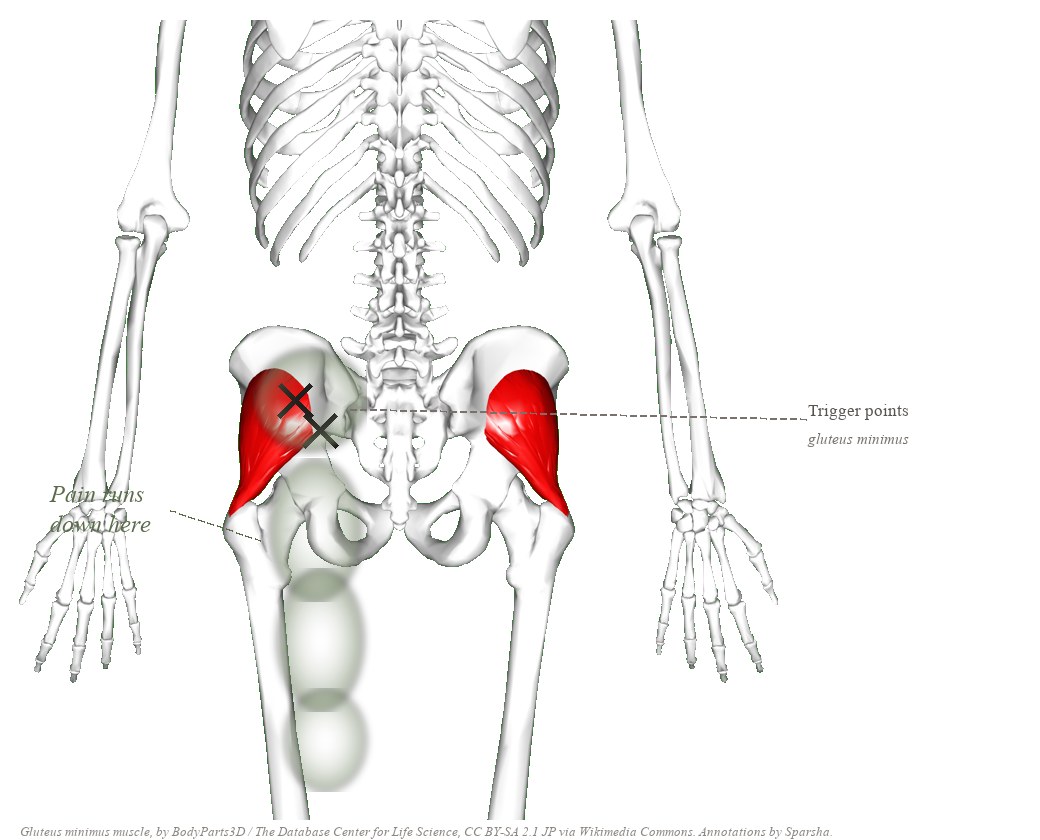
The work, in a session. Layered. Skin first. Then the superficial glute maximus. Then medium-depth muscles. Then piriformis. Then glute minimus, which sits deepest and usually needs every layer above it to be relaxed before it can be reached. Time, patience, sequence. The dramatic relief, when it comes, usually lasts.
Two things to try this week.
Figure-4 stretch. Lie on your back. Cross one ankle over the opposite knee, making the figure-4 shape. Reach through and pull the underneath thigh toward your chest with both hands. The stretch is felt deep in the buttock on the crossed side. Thirty to sixty seconds. Switch. This is the single most useful stretch for piriformis and glute minimus.

Tennis ball in the glute. Lie on your back, place a tennis ball under the meatiest part of the buttock, slightly to one side of the tailbone. Let body weight sink onto it. Find a tender spot, breathe, let it soften for thirty seconds. Move an inch, repeat. Two or three spots per side is plenty. This reaches deeper than your hands can.
When to bring in a professional.
A bodyworker, if the pattern is buttock-and-down-the-leg but stops around the knee, and there's no numbness, tingling, or foot weakness. That's the imposter signature, and it responds to manual work.
A physical therapist, if symptoms persist after a few sessions of bodywork, or there's any loss of function or balance.
A doctor, immediately, if any of the following: numbness or tingling running to the foot, weakness in a foot (can't lift the toes or stand on the heel), pain that came on suddenly after a fall, loss of bladder or bowel control, or fever with the back or leg pain. Those need imaging, and they need it soon.
The label "sciatica" gets attached to a lot of pain that isn't sciatica. The right name leads to the right path. The wrong name sends people to MRI machines for a problem a tennis ball could have started solving the same week.